Affiliate disclaimer: We work with most brands and retailers featured and earn commission on purchases.
Why Loopwheel T-Shirts Are Different—and Which Ones Are Worth Buying
If The Bear sent you looking for the perfect white T-shirt, you’re far from alone. Carmy made a plain white tee look ridiculously good—and pushed once-niche loopwheeled basics into the mainstream.
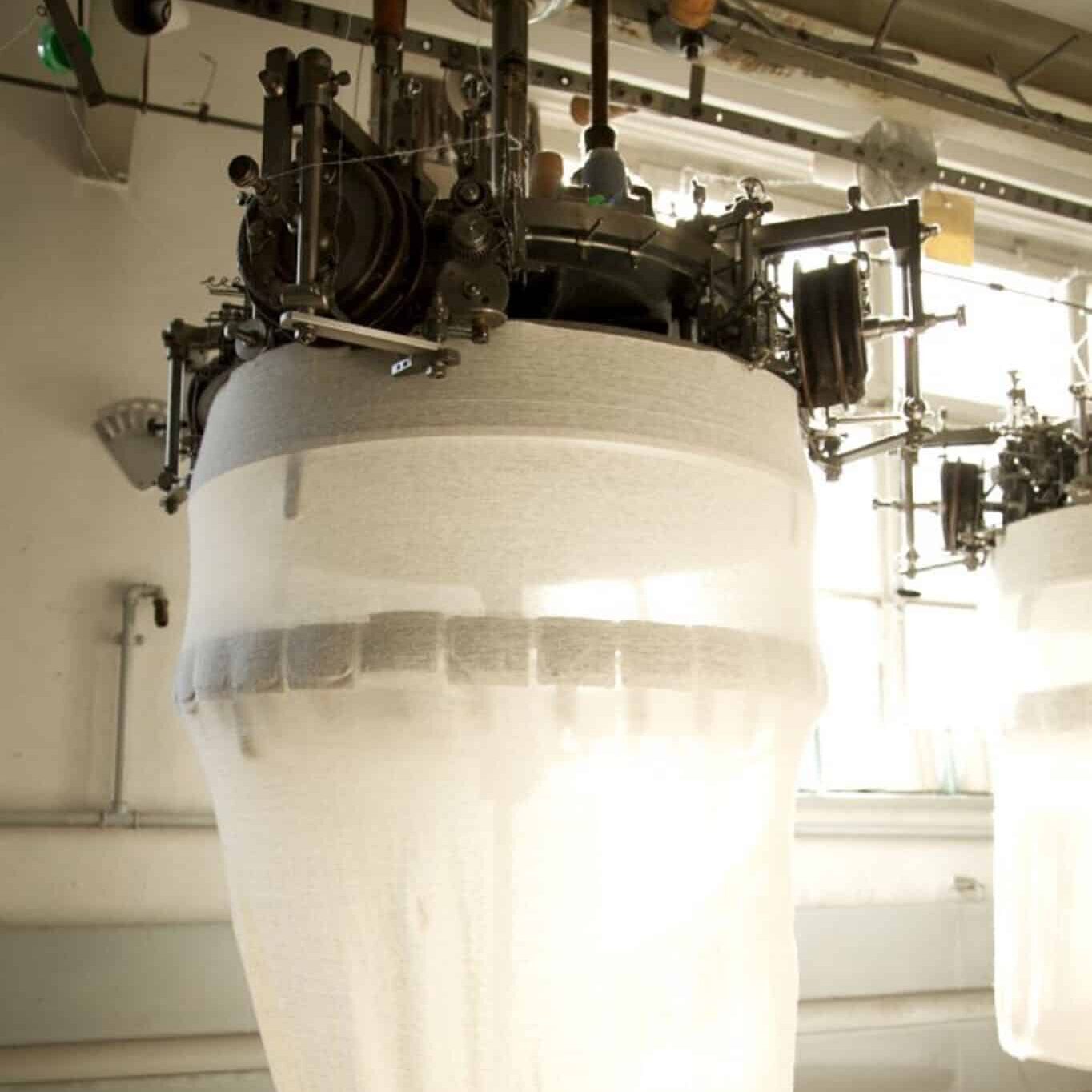
Loopwheel is the ‘selvedge of knitwear.’ Old circular knitting machines work slowly, producing tubular jersey under very low yarn tension, which gives the fabric much of its distinctive feel and character.
This guide focuses on the best loopwheeled T-shirts you can buy right now, from lighter easy-wearing options to seriously substantial tees. For each one, I cover the fabric, fit, feel and value—and who it makes the most sense for.

TL;DR – The Loopwheel T-Shirt Shortlist
These are the tees I’d start with—three genuine loopwheel picks and two standout alternatives.
- Merz b. Schwanen 215 – Midweight, classic, and German-made – best if you want the loopwheel tee made famous by The Bear.
- The Flat Head Heavyweight T-Shirt – Dense, textured, and hard-wearing with a triple-stitched collar – best for long-term durability.
- UES No. 8 Slub – Heavy, wildly textured, and full of slub and nep – best if fabric character is what you’re after.
- Whitesville Quali-T – Two tees for the price of one – the best loopwheel T-shirt that isn’t actually loopwheeled.
- Warehouse 4601 – Lightweight, breathable, and full of texture – another non-loopwheel standout, especially for warmer weather.
👇 Scroll down for full details on these five, more great options, and how to pick the right one for you.
Want Help Finding More Great T-Shirts and Menswear?
Every Friday, I publish the DH Weekly—my column and newsletter with new guides, standout products, restocks, and menswear worth paying attention to. If that sounds useful, it belongs in your inbox.
How I Picked the Tees
To make the cut, each tee on this list checks these boxes:
- Crewneck collar only (no V-necks, no henleys)
- Available in white, but most come in other colours too
- No chest pockets
Some I’ve worn and washed countless times; others I’ve only handled. All have earned their place based on fabric, construction, and experience.
For fit reference, I’m 178 cm / 5’10” and around 75 kg / 165 lbs. Where I own a tee, I’ve included the size I wear and how it fits me.
Good Options at Every Budget
I’ve used these to indicate the typical retail price of each T-shirt:
| $ = under $80 | $$ = $80–$120 | $$$ = over $120 |
Merz b. Schwanen 215 ($$)
Jeremy Allen White didn’t make the 215 what it is, but he did put it in front of a much bigger audience. Merz b. Schwanen had been making the tee on its original German loopwheelers long before The Bear turned it into a menswear reference point.
At 7.2 oz. (245 gsm), the 215 sits firmly in midweight territory. Its 2-thread organic cotton jersey is knitted on Merz’s original loopwheelers in Germany. It has more body than a standard T-shirt without becoming a heavyweight.
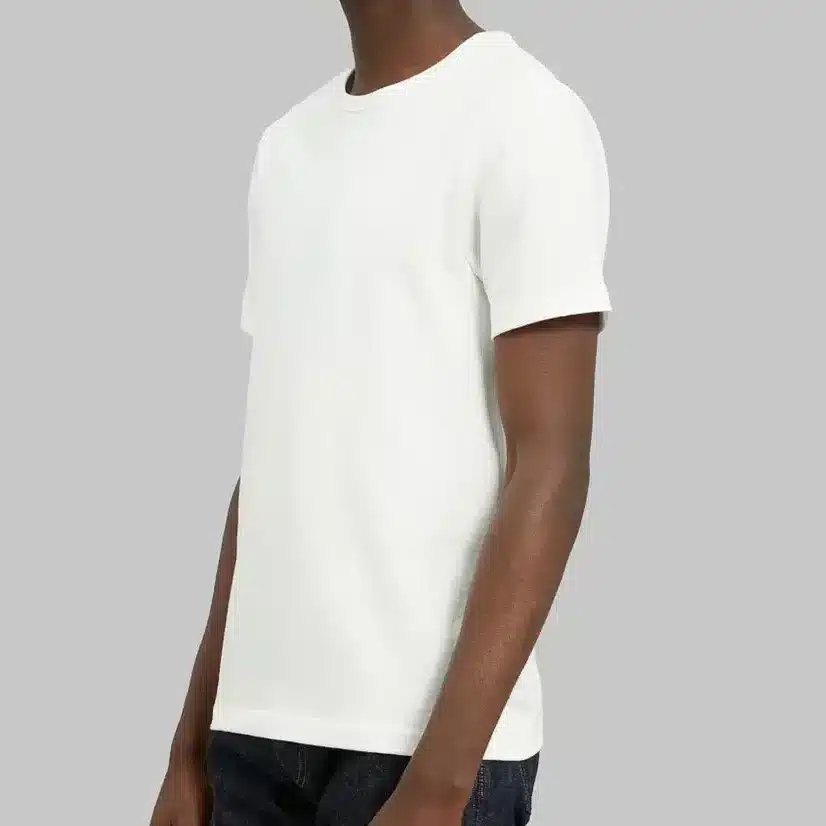

Heavy, Iconic, and Loopwheeled in Germany
- Fit: Casual slim fit with a bit more length than most Japanese tees.
- Fabric: 7.2 oz. (245 gsm) loopwheeled organic cotton, unwashed.
- Features: Triangular underarm inserts, reinforced sleeve and bottom hems, and a slightly wider collar.
- SizIng: Size up once from your usual Western size; expect ~1” shrinkage after first wash.
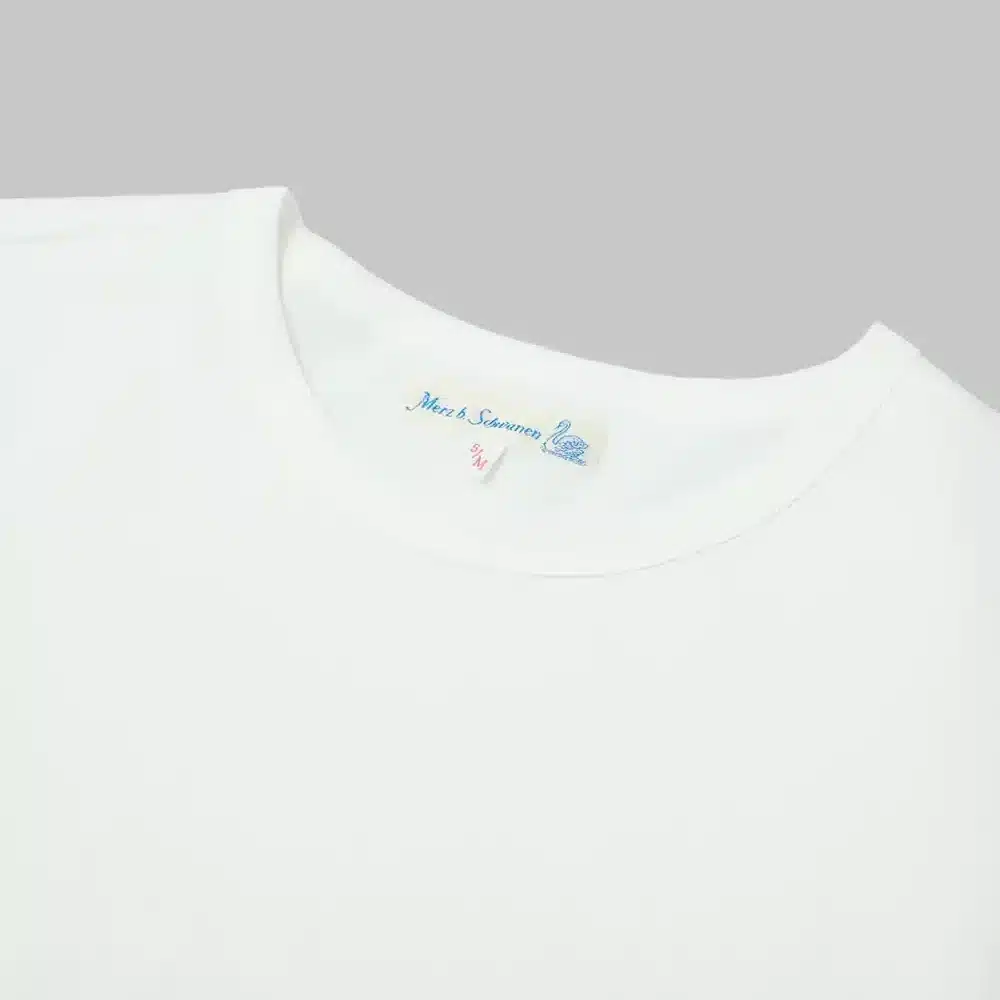
Best For: Anyone who wants a classic midweight loopwheel tee, especially if German-made matters to you.
My Take: I haven’t wear-tested the 215 myself, and tend to prefer a tighter collar, but I get the hype. The construction, silhouette, and fabric are on point—and it’s probably the most in-demand tee on the market right now.
Merz b. Schwanen is sold at: Redcast Heritage (ES), Franklin & Poe (USA), Lost & Found (CA)
The Flat Head Heavyweight T-Shirt ($$)
The Flat Head’s plain heavyweight tee is one of the more substantial options in this guide, with dense loopwheeled jersey made from long-staple cotton. The fabric has plenty of texture and body, but what really sets the tee apart is the neckline: a triple-stitched collar designed to hold its shape over years of wear.
The fit is slim without being extremely tight, with the compact proportions you’d expect from a Japanese tee. I’d leave the exact fabric weight out for now because Redcast and Rivet & Hide currently give different figures.

Reinforced, Resilient, and Built to Last
- Fit: Slim-to-regular with a slightly boxy shape.
- Fabric: Heavyweight long-staple cotton jersey, loopwheeled in Japan.
- Features: Triple-stitched no-sag collar, seamless tubular construction, and dense, textured fabric.
- Sizing: Runs small; size up at least once from your usual Western size.
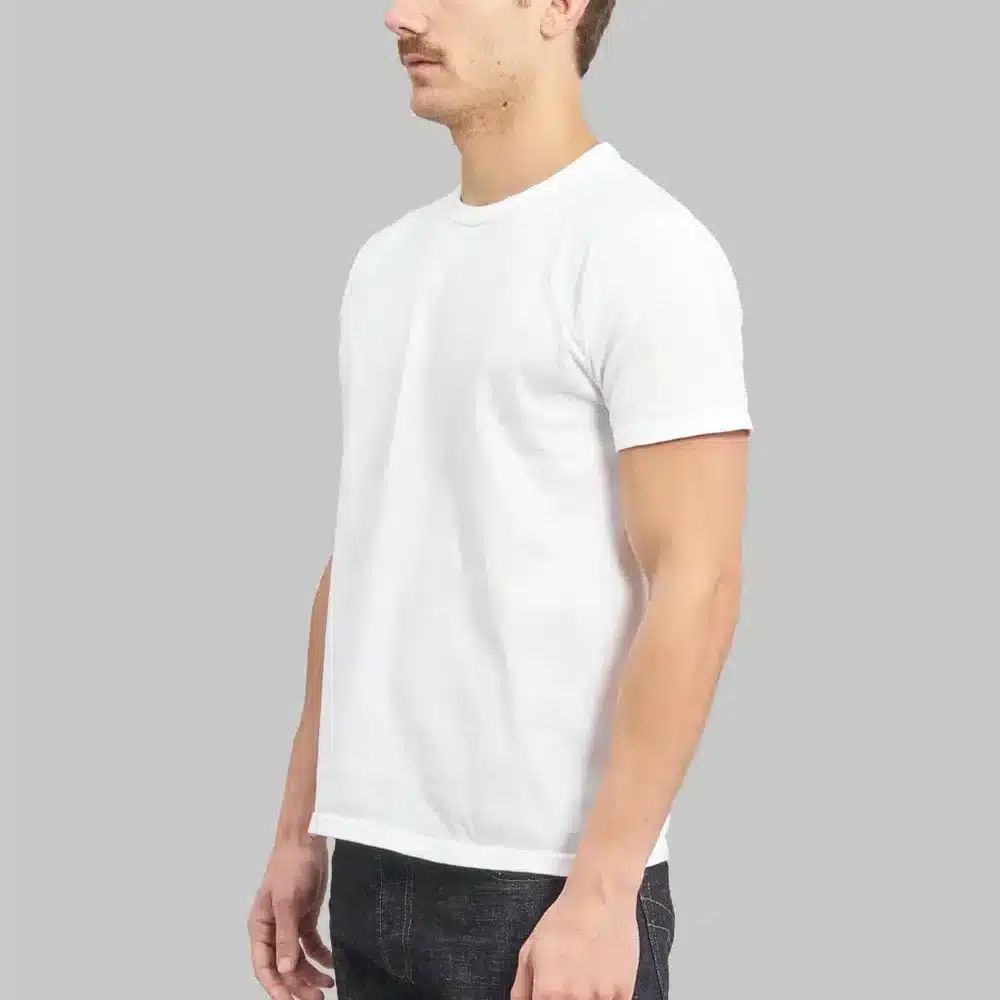
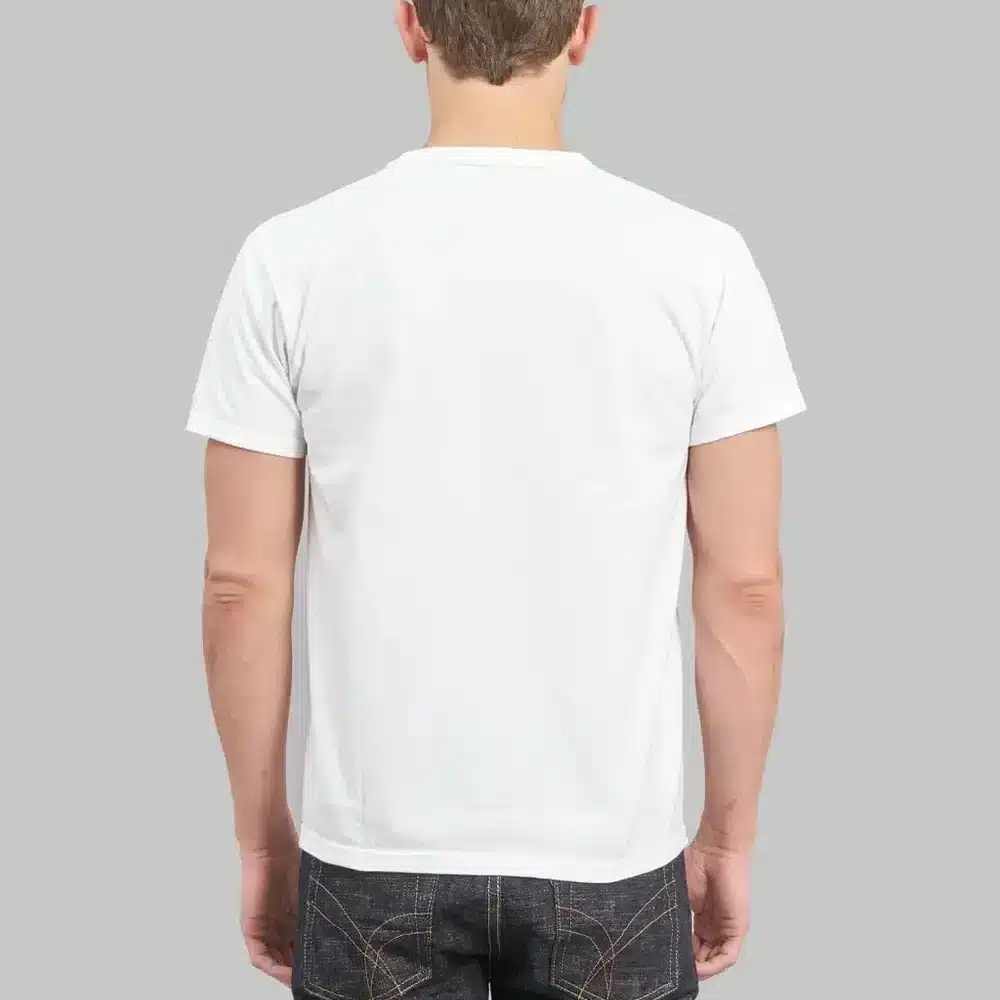
Best For: Anyone who wants a seriously durable heavyweight tee with a dense knit and reinforced collar.
My Take: I picked up a Flat Head tee in Japan almost a decade ago, and I’ve worn it to death. I have no idea whether it’s the TKC or THC, but that almost proves the point: these tees just don’t quit.
The Flat Head is available at: Redcast Heritage (ES), Franklin & Poe (US), and Iron Shop Provisions (US)
Also Consider: If this one isn’t heavy enough, The Flat Head also makes an absurd 20 oz. Ultra-Heavyweight T-Shirt. It’s a completely different proposition from the regular heavyweight tee—and easily substantial enough to deserve a mention here.
Tubular, Not Loopwheeled
Whitesville Two-Pack ($ each)
Whitesville’s two-pack is the best-value option here: two substantial Japanese tees for roughly the price of one premium loopwheel tee. The 7 oz. combed-cotton jersey has real body, while the double-binder neck keeps the collar structured.
One important footnote: these aren’t actually loopwheeled. Toyo Enterprise describes the seamless body as tubular-knit rather than loopwheeled. You still get the clean no-side-seam construction and vintage feel—just without the loopwheel process.

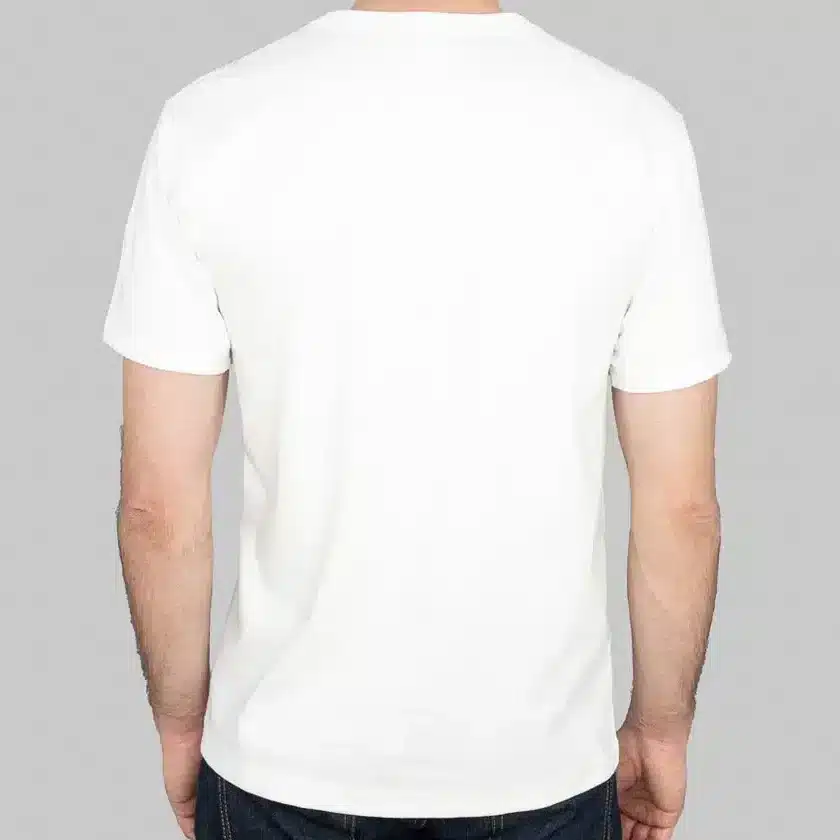
Quality Like Loopwheeled, Two-Pack Value
- Fit: Slim, with slightly shorter sleeves and classic Japanese proportions.
- Fabric: 7 oz. (237 gsm) combed-cotton tubular jersey, unwashed.
- Features: Seamless body, double-binder neck, retro packaging, and two tees per pack.
- Sizing: Runs small; size up at least once and allow for shrinkage after the first wash.
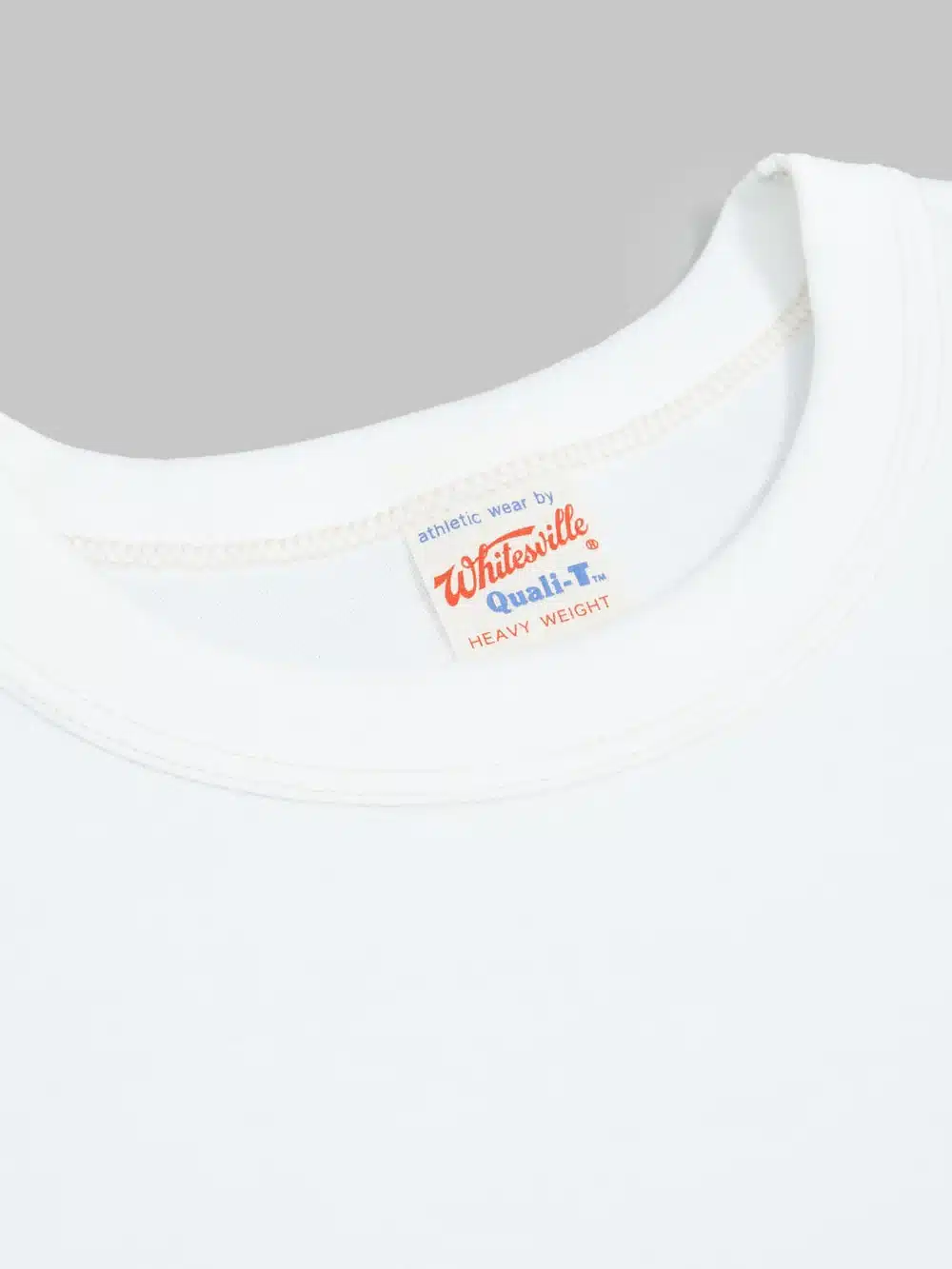
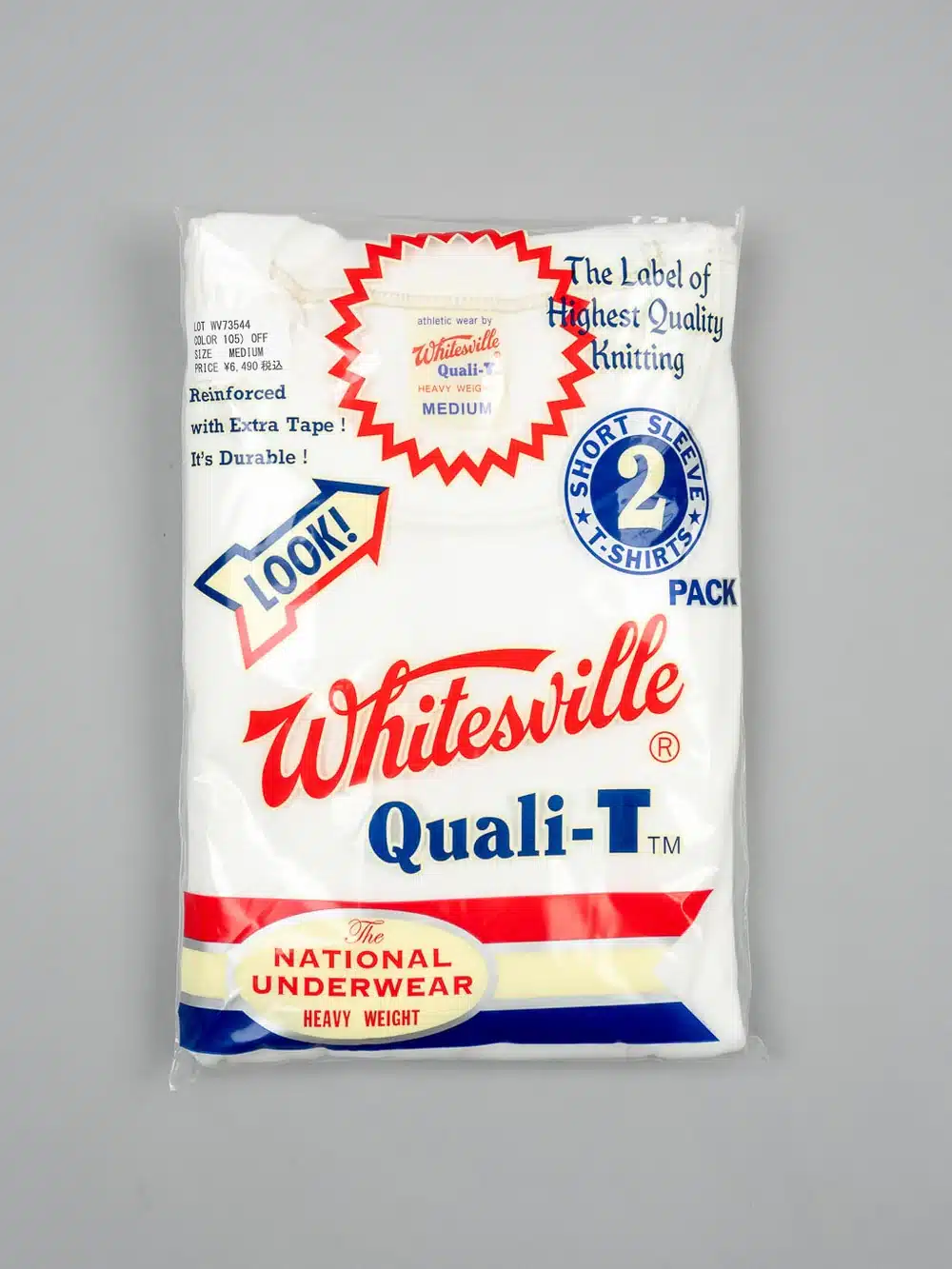

Best For: Anyone who wants a substantial, vintage-style two-pack without paying premium loopwheel prices.
My Take: I haven’t worn this one, but I’ve handled it and spoken with wearers I trust. The double-binder collar is particularly good, and at this price, the two-pack is hard to argue with.
Redcast Heritage (ES), Brooklyn Clothing Co. (CA), and Hinoya (JP) sell Whitesville.
UES No. 8 Slub ($$)
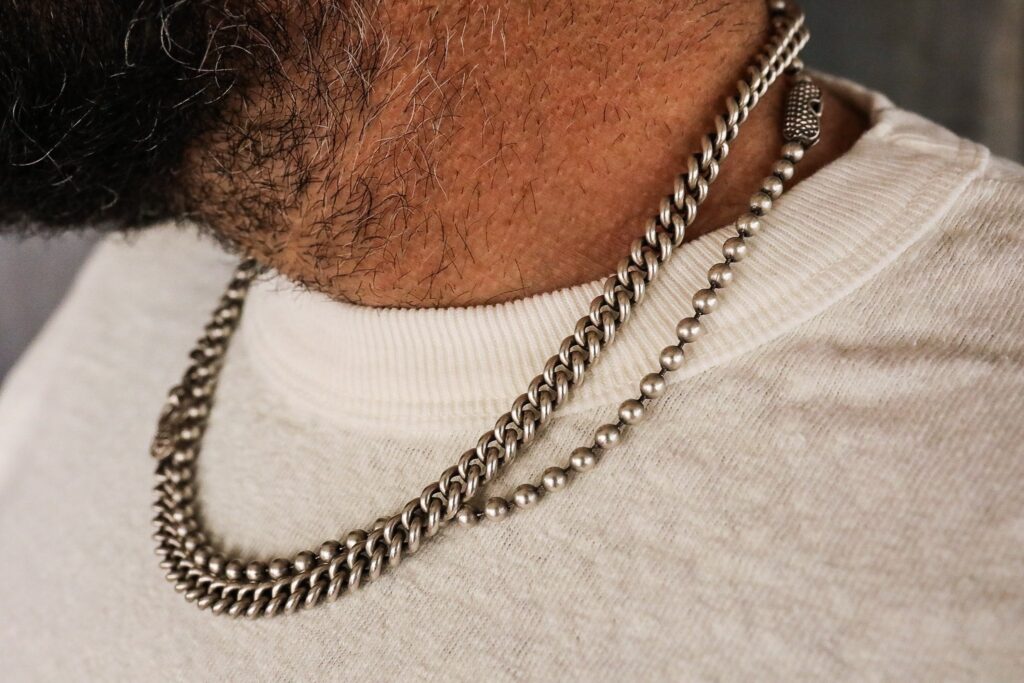
UES’ No. 8 Slub is a heavyweight loopwheeled tee with standout texture and vintage character. The slub and nep give the fabric far more visual movement than the smoother tees in this guide.
Made in Japan from firm 9.5 oz. cotton jersey, it feels substantial without relying on extreme weight. The thick ribbed collar balances the texture and keeps the overall look clean.
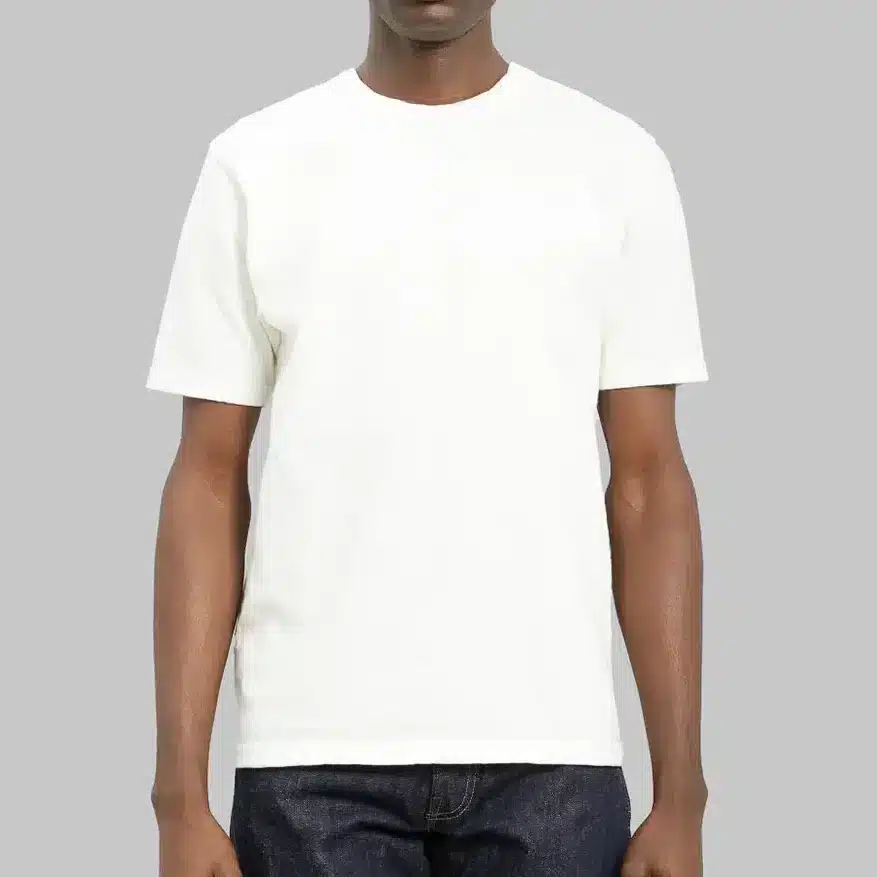
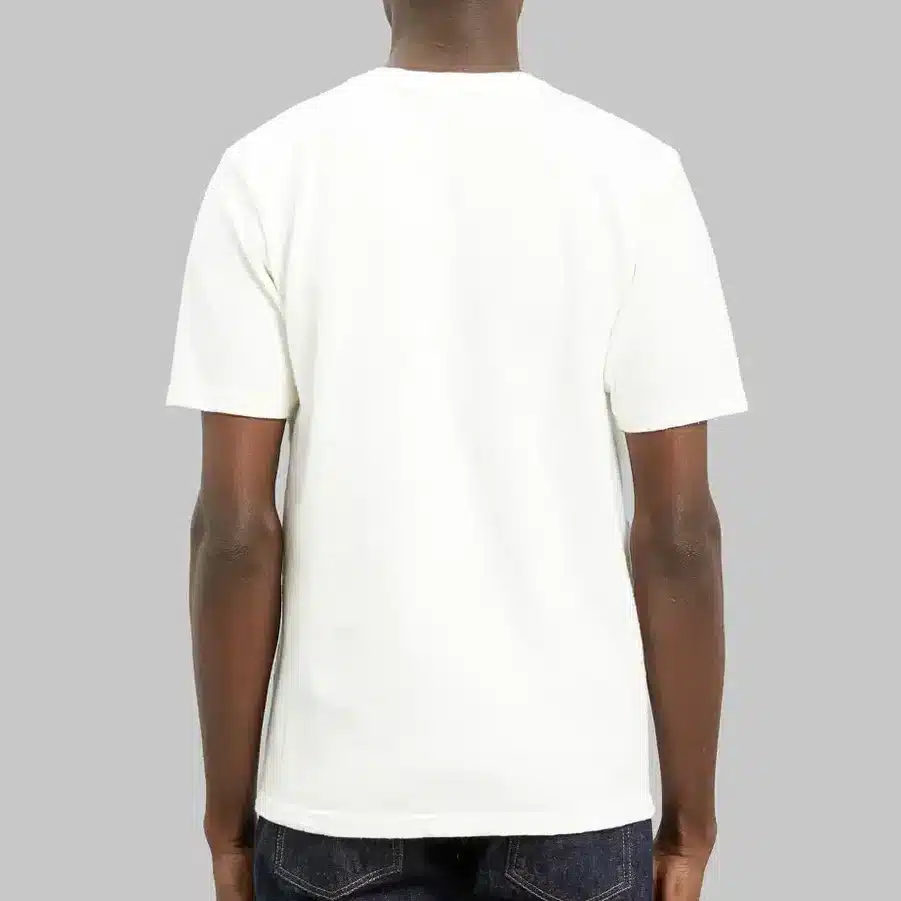
Wild Texture, Weighty Feel, and a Clean Look
- Fit: Slim with balanced proportions and a slightly shorter length.
- Fabric: 9.5 oz. (322 gsm) loopwheeled cotton with pronounced slub and nep; one-washed.
- Features: Bold texture, thick ribbed collar, and clean styling.
- Sizing: Size up two from your usual Western size for best fit.

Best For: Anyone who wants pronounced slub and nep to be the main event.
My Take: I haven’t worn the No. 8 myself, but it’s one of those tees that stops me mid-scroll. The texture is the whole reason to buy it.
UES is available at Redcast Heritage (ES), Brooklyn Clothing Co. (CA), Iron Shop Provisions (US), Franklin & Poe (US), Blue Beach Denim (TW)
Studio D’Artisan 9913 ($$)
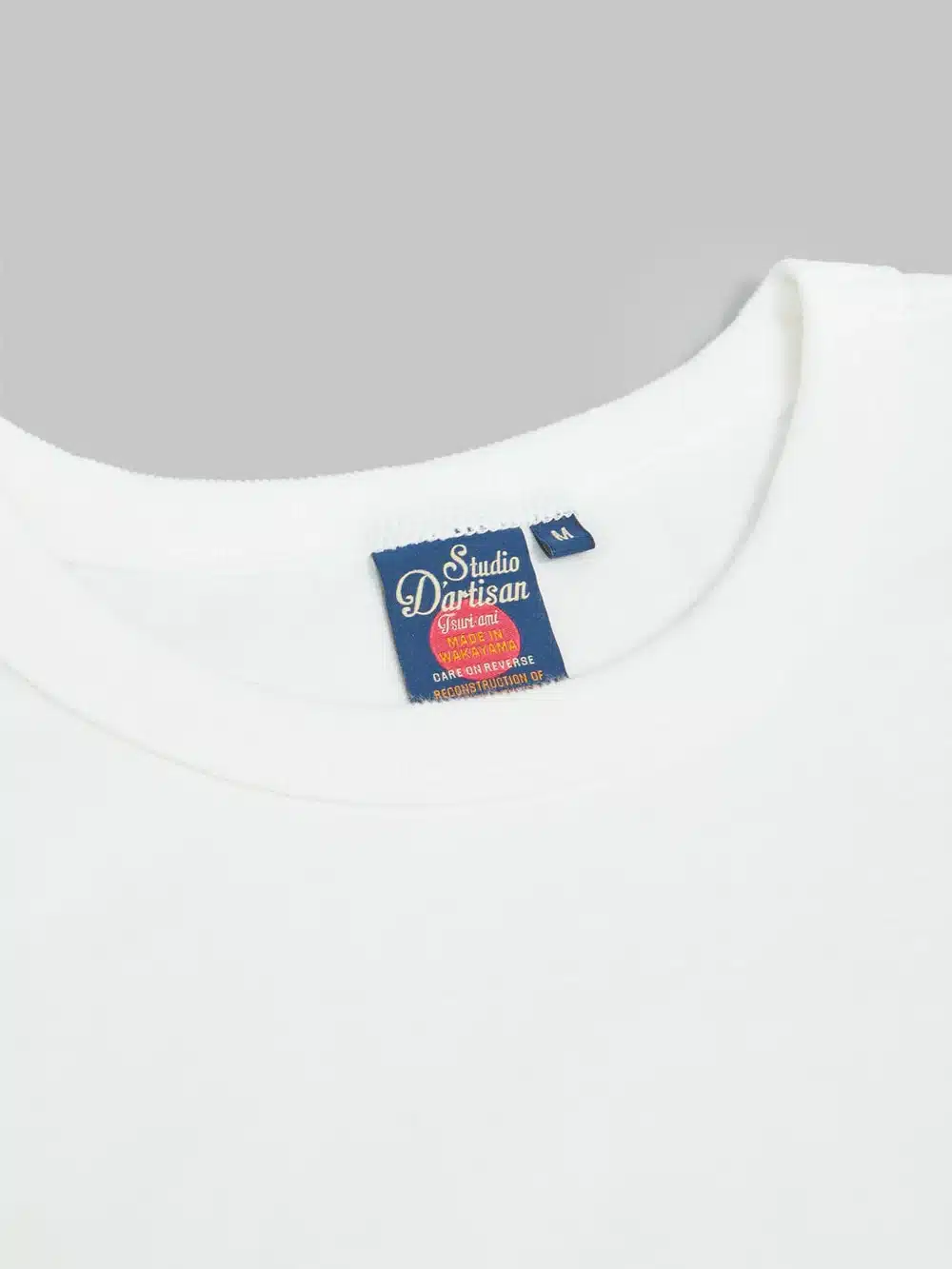
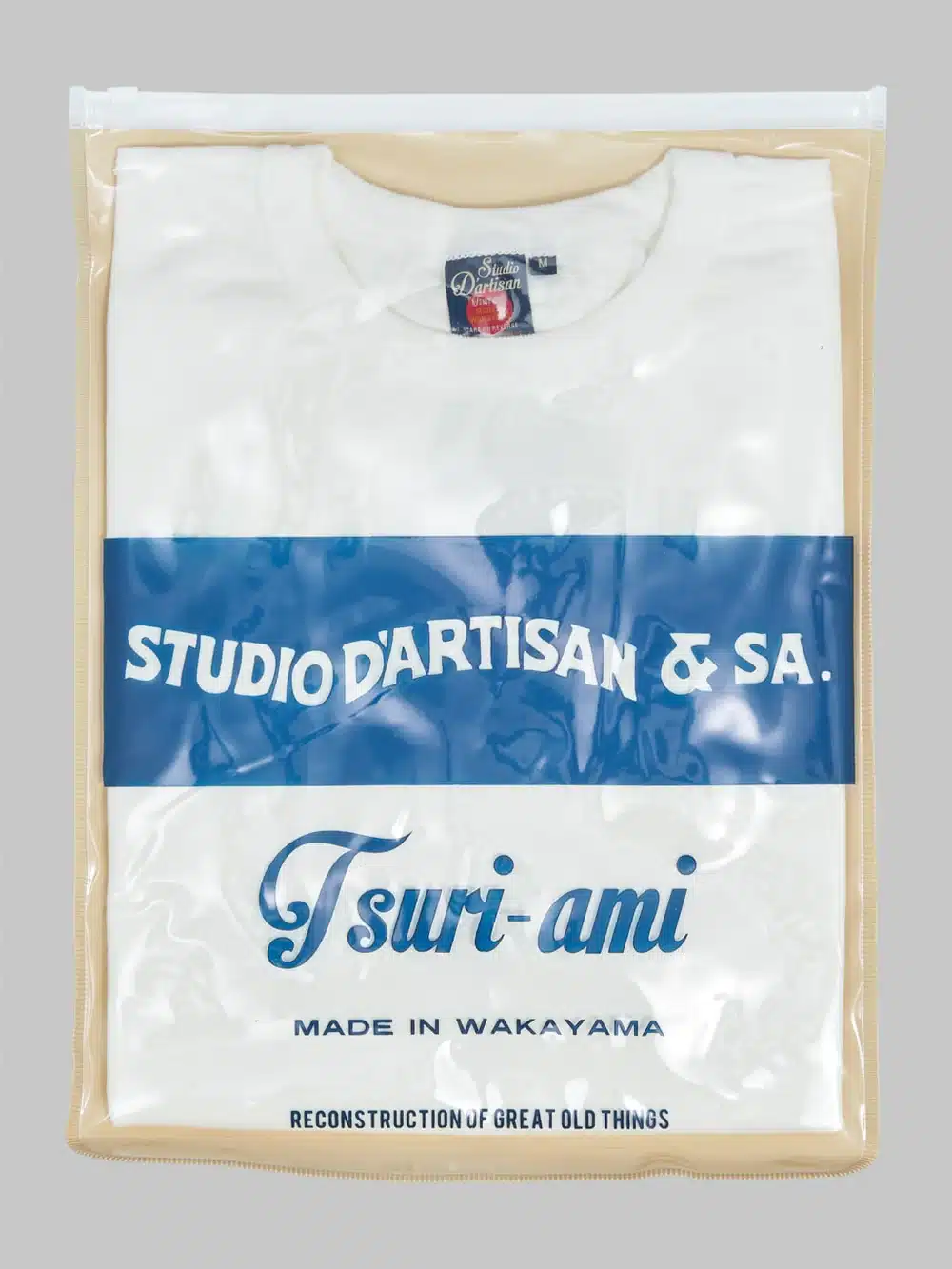
Studio D’Artisan’s 9913 is a properly heavyweight loopwheeled tee, but the long-staple cotton gives the dense 10.5 oz. jersey a smoother hand than you might expect from the weight.
Knitted on tsuriami machines in Wakayama, it combines substantial fabric with a slim Japanese fit and a reinforced collar.

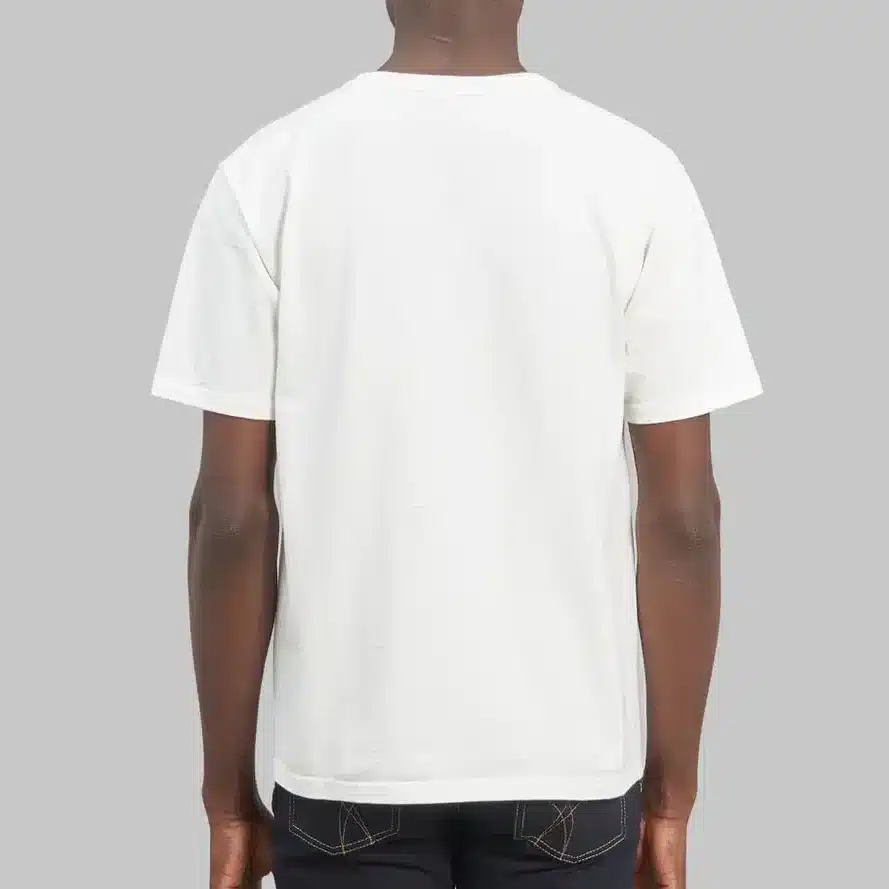
Heavyweight, Smooth, and Structured
- Fit: Slim and structured, with classic Japanese proportions.
- Fabric: 10.5 oz. long-staple cotton loopwheel jersey.
- Features: Dense jersey, triple-stitched collar, and clean finishing.
- Sizing: Runs small; size up at least once from your usual Western size.
Best For: Anyone who wants a genuinely heavyweight loopwheel tee without moving into sweatshirt territory.
My Take: I haven’t worn the 9913 myself, but the combination of 10.5 oz. fabric and long-staple cotton is what makes it interesting to me. It has serious weight without looking overly bulky.
You can buy Studio D’Artisan from these retailers: Redcast Heritage (ES), Division Road (US), Brooklyn Clothing (CA), Hinoya (JP)
Rarer Than LoopwheelED
Warehouse 4601 ($)
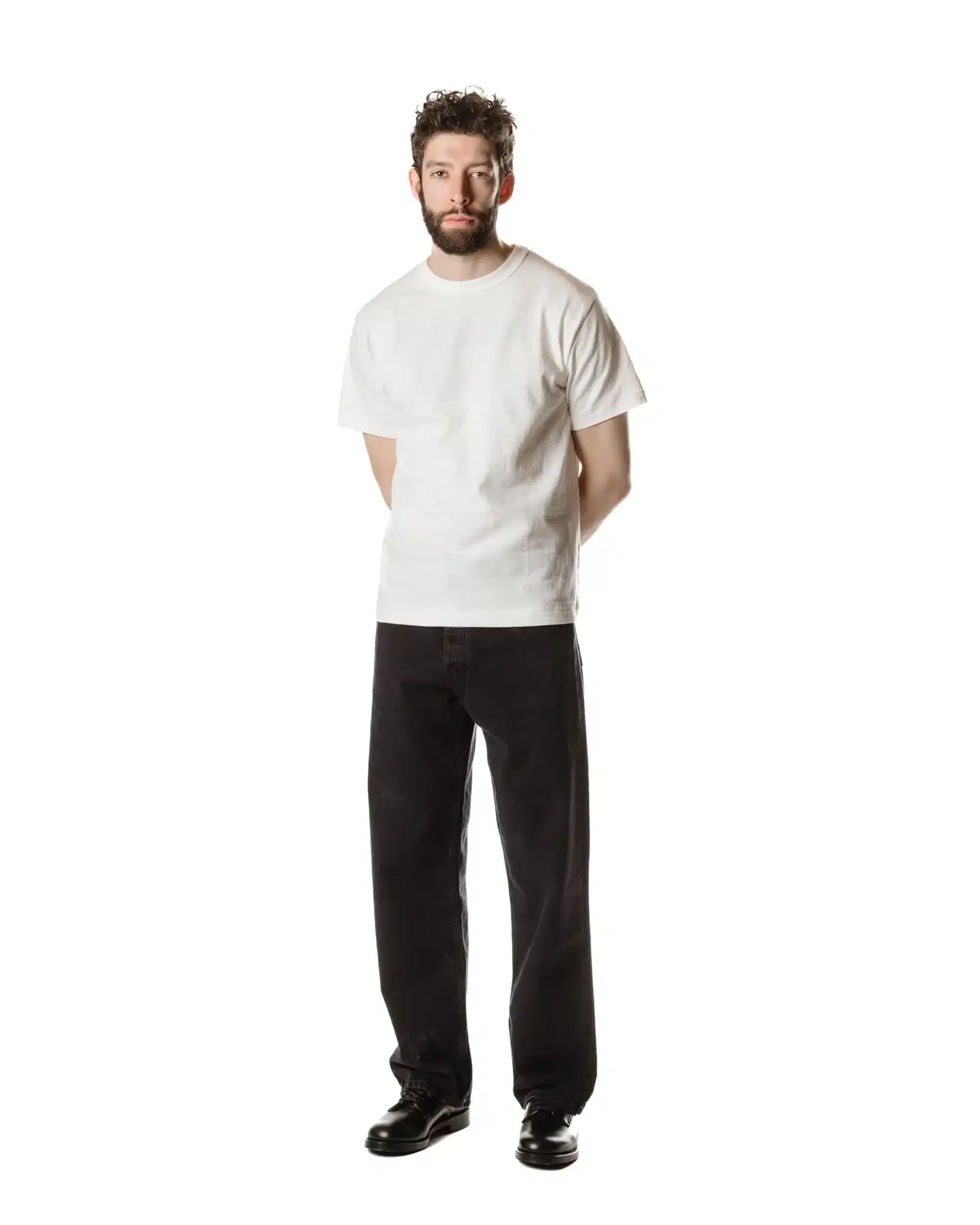
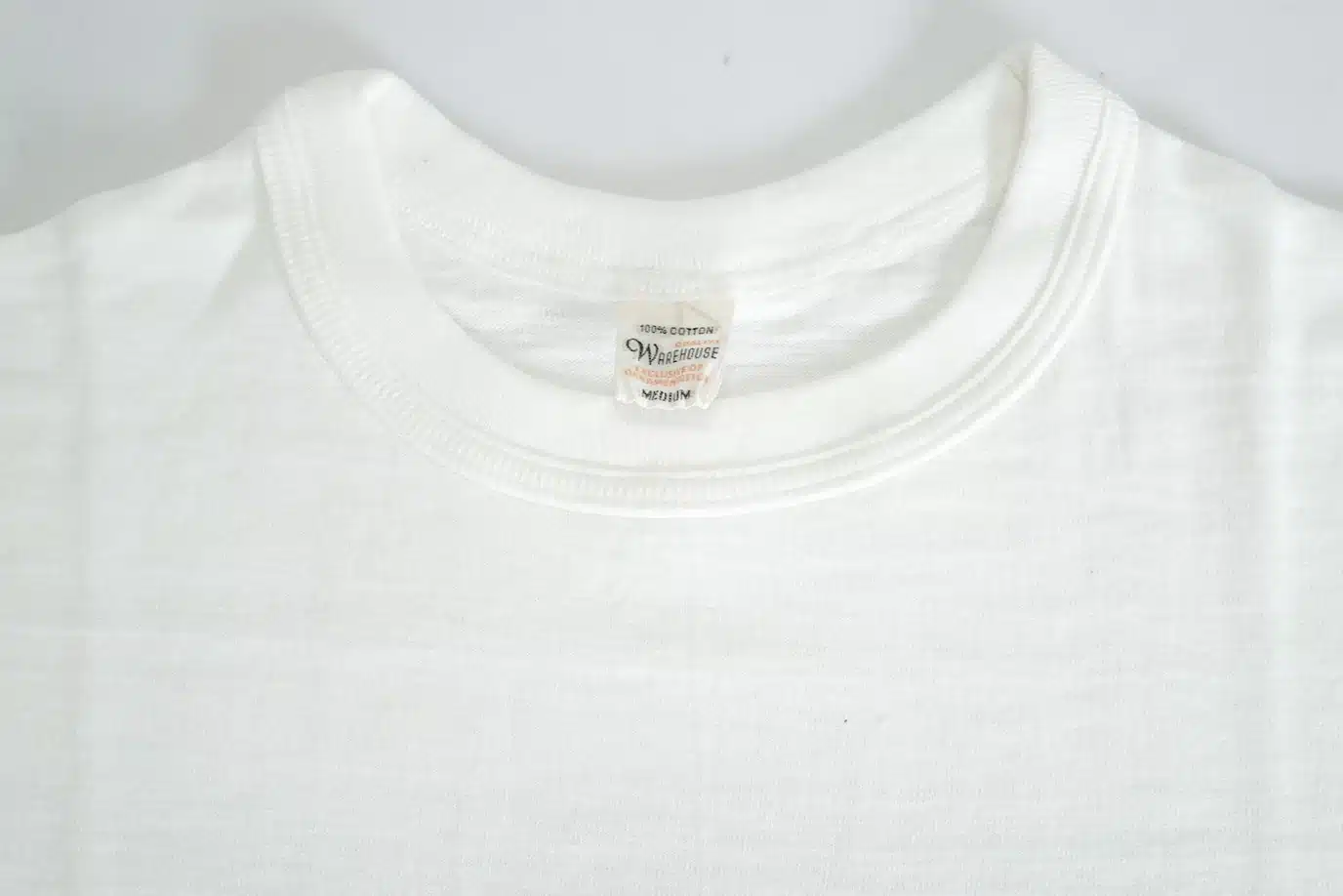
The 4601 isn’t loopwheeled, but it absolutely belongs in this conversation. Warehouse uses an old low-gauge knitting machine that the brand says is even rarer than a loopwheel machine, producing a tubular jersey with loads of character.
Its 12-count uneven yarn creates the subtle horizontal ‘shadow border’ texture that makes the 4601 so distinctive. It’s light, breathable, and one of my personal favourites for warmer weather.

Low-Gauge, Slubby, and Seriously Breathable
- Fit: Relaxed and slightly boxy, with easy-fitting sleeves.
- Fabric: 100% cotton, 12-count uneven-yarn low-gauge jersey, unwashed.
- Features: Tubular construction, distinctive shadow-border texture, and reinforced ribbed collar.
- Sizing: Runs small; most will need to size up for a good fit. Try your regular size for a slimmer, snugger cut.
Best For: Anyone who wants a light, textured Japanese tee for warmer weather.
My Take: The 4601 is the T-shirt on this list I’ve worn more than any other. It’s easy, airy, and has enough character to stand on its own. The fit is a little boxy and the texture won’t be for everyone—but if it clicks, it really clicks.
Warehouse is sold at Lost & Found (CA), Cultizm (DE), Hinoya (JP), and Clutch Café (UK).
Iron Heart IHT-1610L ($$)
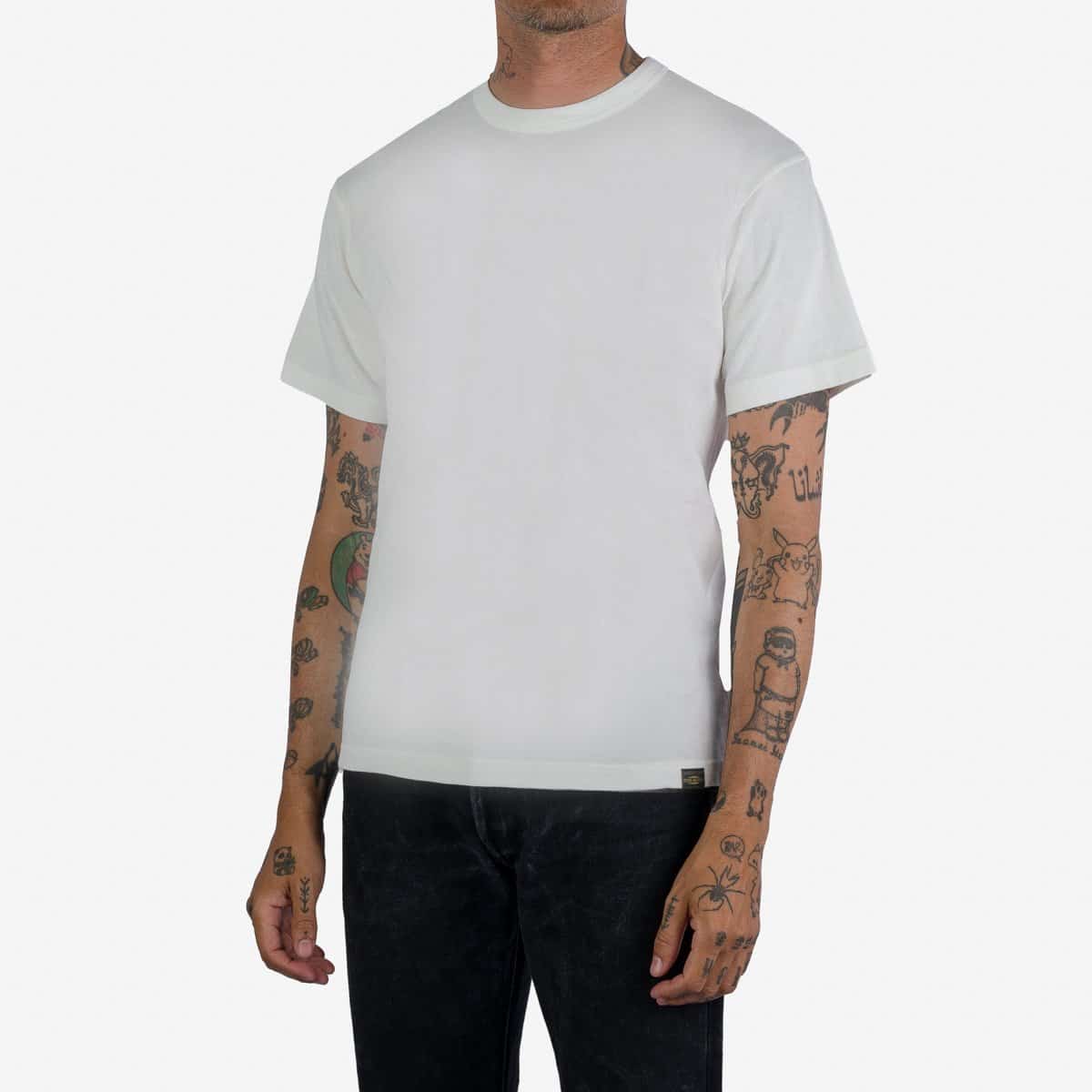
Iron Heart’s IHT-1610L is the longer-bodied version of the classic 1610, giving you more length without losing the compact proportions of a Japanese tee.
Made in Japan from smooth 6.5 oz. loopwheel jersey, it has a cleaner, more even surface than the slubbier tees in this guide and enough substance without feeling overly heavy.

Longer Body, Boxier Fit, Iron Heart Tough
- Fit: Slightly boxy with extra body length.
- Fabric: 6.5 oz. (220 gsm) Japanese loopwheel cotton with a smooth, even finish.
- Features: Double-stitched collar, wider sleeves, high-cut armholes, and subtle hem label.
- Sizing: Runs small; size up if you want more room through the body.
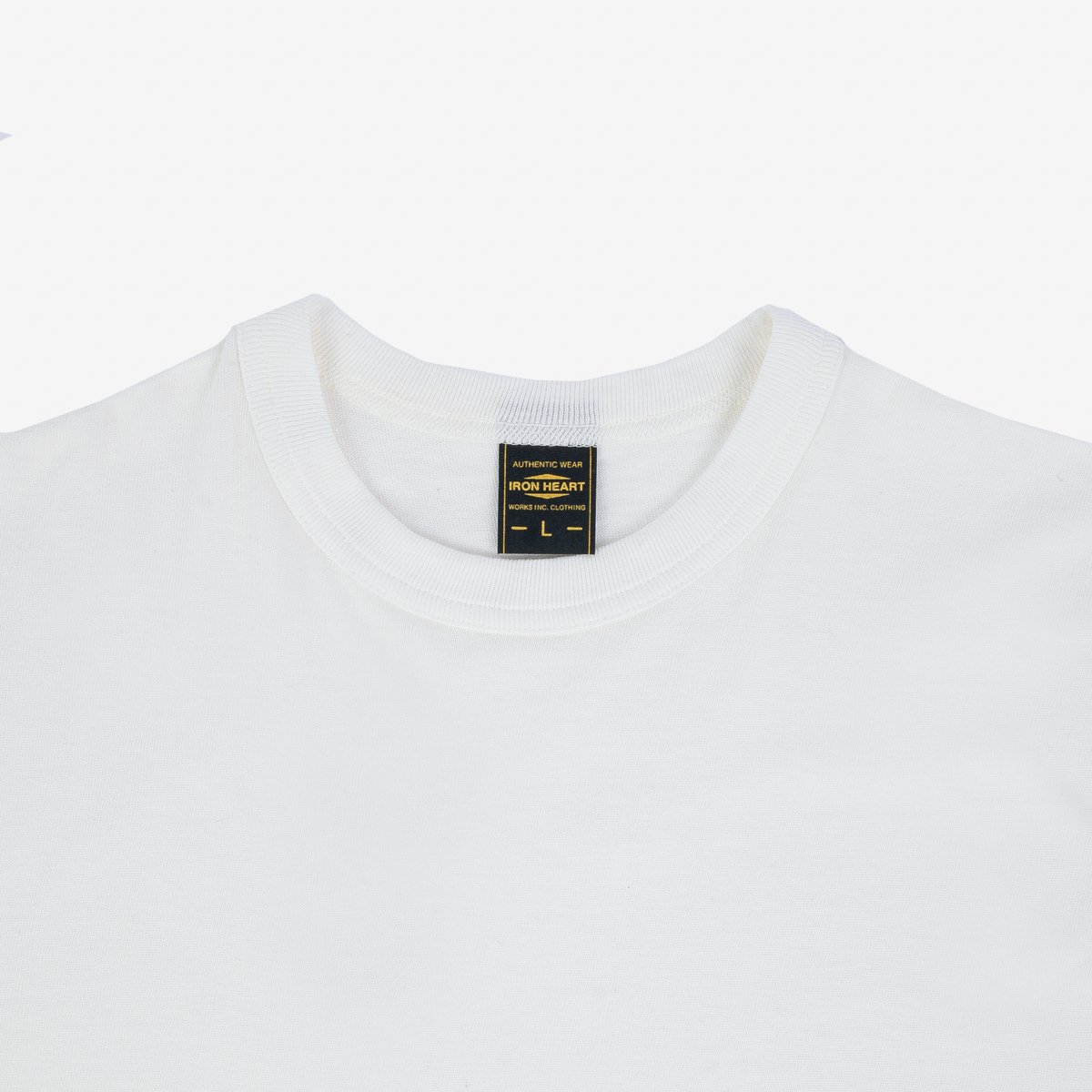

Best For: Anyone who likes Japanese tees but usually finds them too short.
My Take: I own a couple of these and love them. I have a Medium, but it’s a little too tight; Large fits me just right. The extra body length is a big part of why this one works so well for me—and why it’s one of my favourite loopwheel tees.
Iron Heart is available at: Division Road (US), Franklin & Poe (US), Brooklyn Clothing (CA), Iron Provisions (US), and of course at Iron Heart International.
The Real McCoy’s MC19010 ($$$)
The MC19010 from The Real McCoy’s takes its cues from vintage athletic T-shirts, with soft loopwheel jersey and a clean, traditional fit.
Made in Japan from 6.8 oz. cotton, it’s lighter and softer than the heavyweight options above, with subtle slub and plenty of stretch in the fabric.
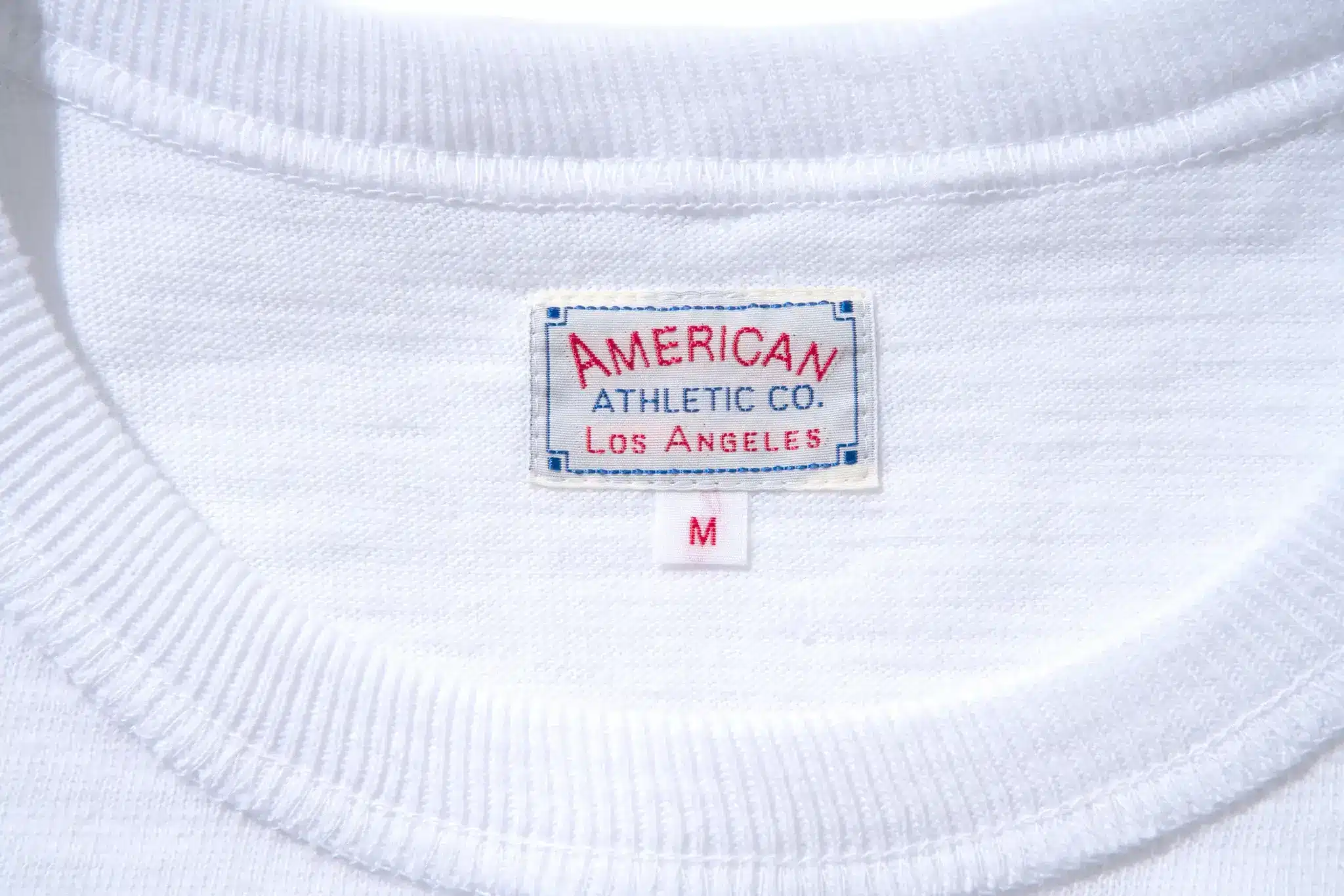
Classic Athletic Fit with Loopwheel Comfort
- Fit: Regular athletic fit with vintage proportions.
- Fabric: 6.8 oz. 100% cotton loopwheel jersey.
- Features: Tubular body, reinforced collar, and subtle slub texture.
- Sizing: Japanese sizing; check the measurements and size up if you want more room.
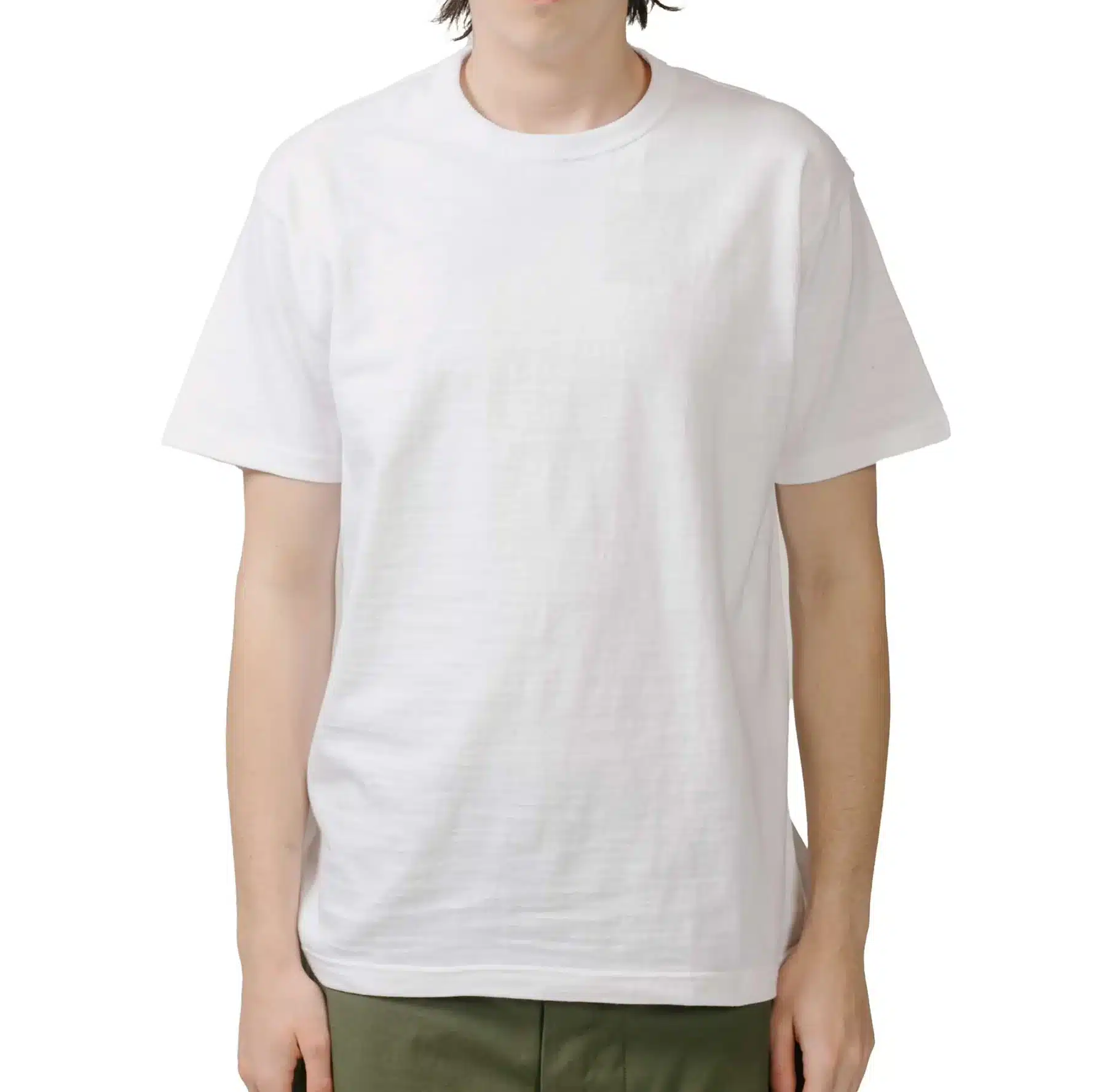

Best For: Anyone who wants a softer, more traditional athletic tee rather than a heavyweight option.
My Take: I haven’t wear-tested the MC19010, but I own two of The Real McCoy’s MC20000 two-pack tees. Their angled rib collars and 7.5 oz. tubular jersey give them a distinctive feel and fit. The MC19010 takes that vintage athletic approach further with genuine loopwheel jersey.
Real McCoy’s is available at Lost & Found (CA) and Clutch Café (UK)
Utilitees ($)
Utilitees takes a slimmer, longer approach to the loopwheel tee. Made in Japan from lightweight 5.5 oz. cotton, it works especially well if the boxier proportions of traditional Japanese tees don’t suit you, and it’s light enough for warmer weather and layering.
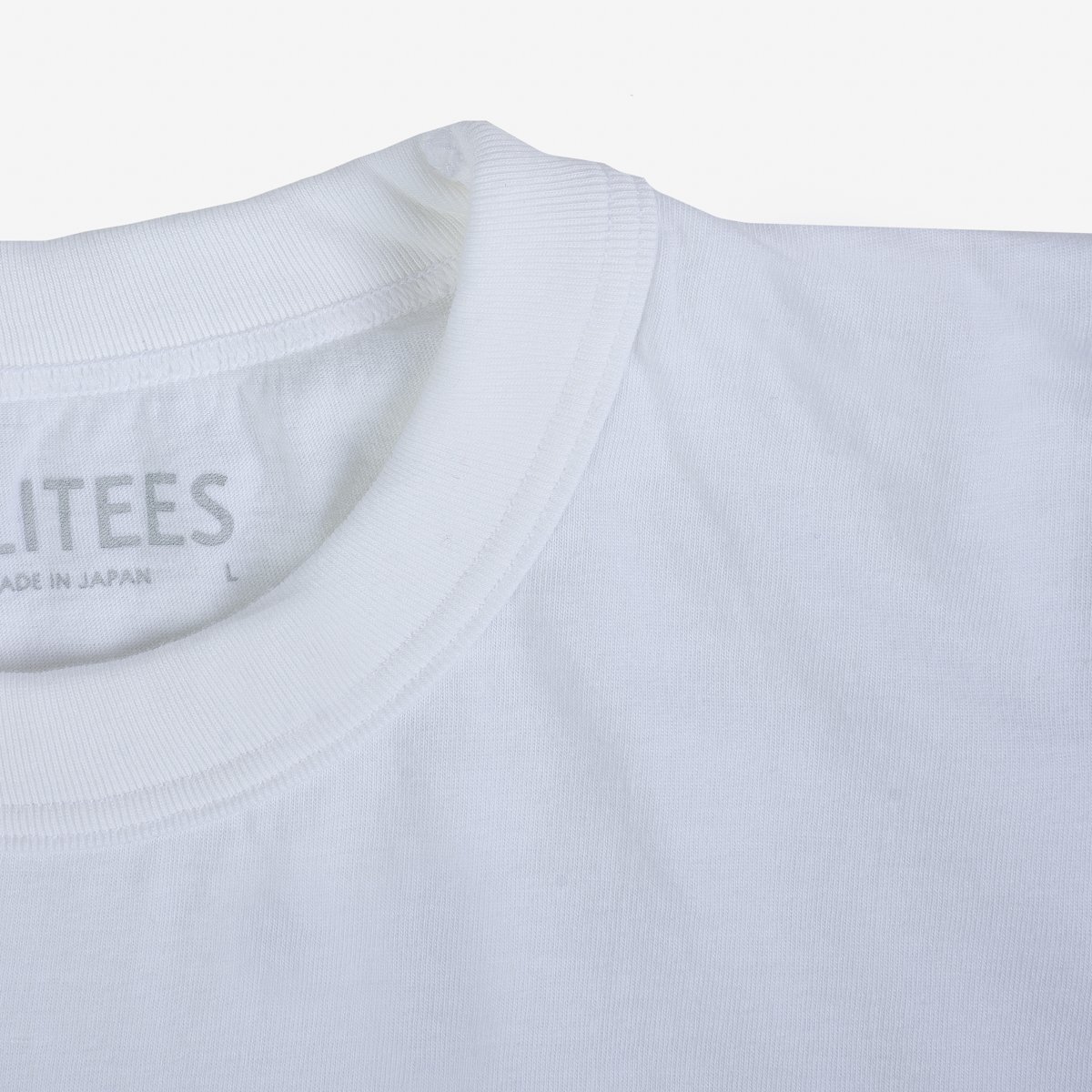
Lightweight, Slim, and Longer
- Fit: Slim with a longer body—good for layering or tucking in.
- Fabric: 5.5 oz. (186 gsm) Japanese loopwheel cotton.
- Features: High ribbed collar, clean silhouette, and broad colour range.
- Sizing: Runs small; size up for more room or stay true for a close fit.
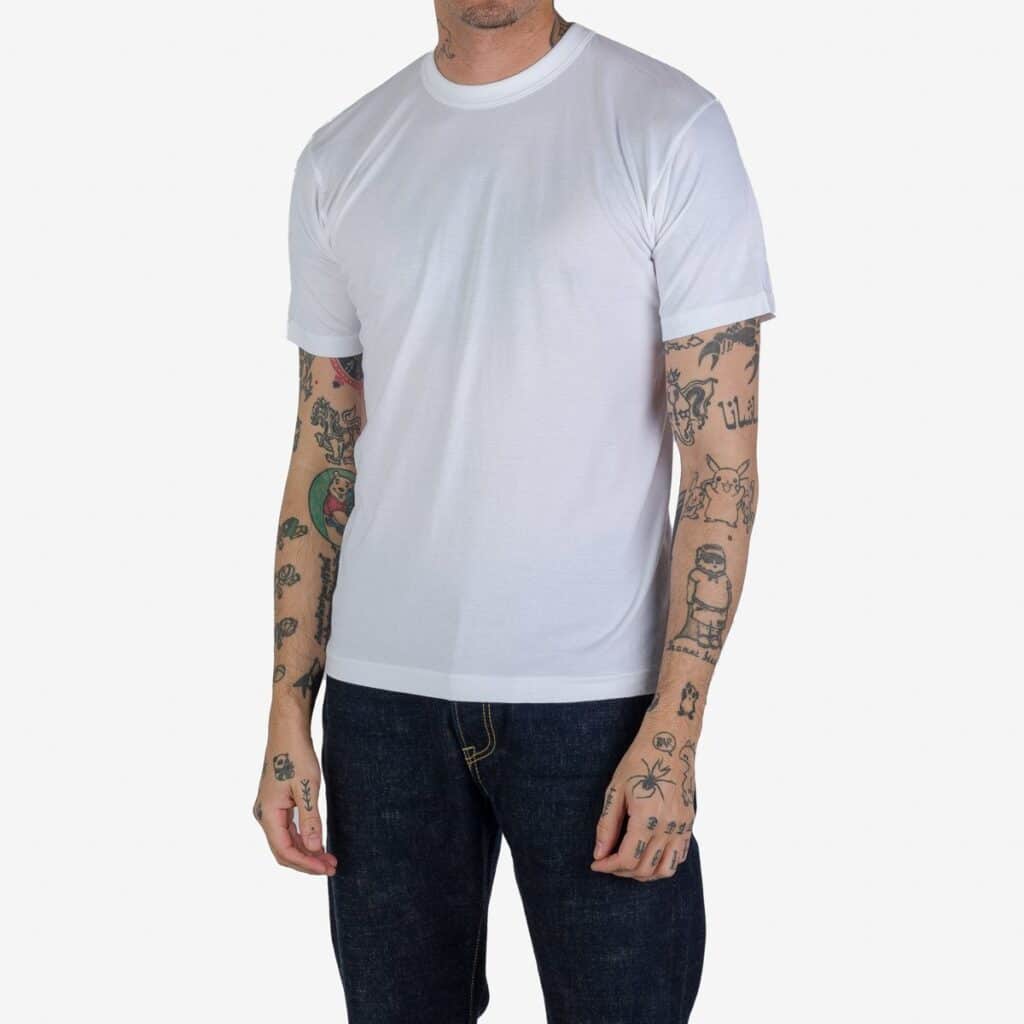
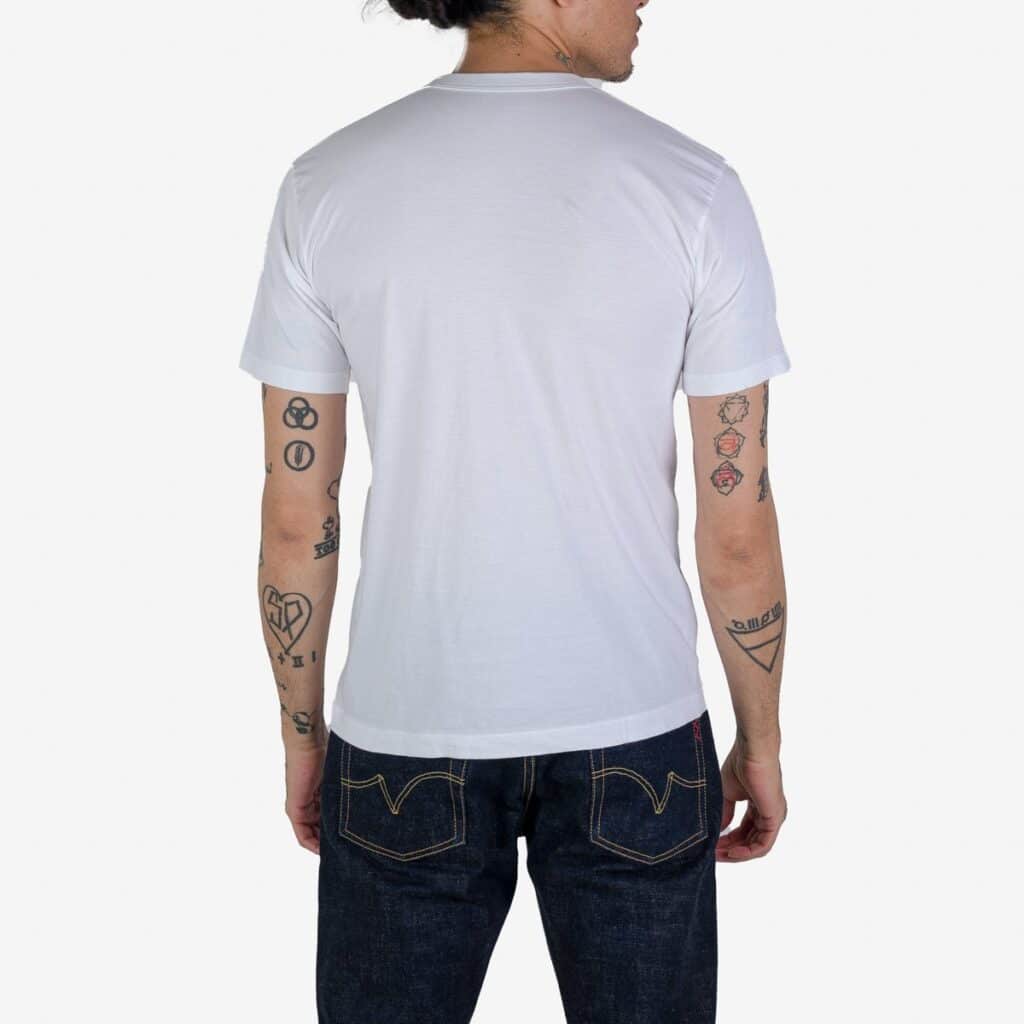
Best For: Anyone who wants a lightweight loopwheel tee with a slimmer fit and extra body length.
My Take: I’ve got four of these, and they’re easily the best-fitting lightweight tees I own. If most Japanese tees feel too boxy or short on you, start here.
What to Know Before You Buy a Loopwheeled Tee
Loopwheeled T-shirts can fit and behave differently from the tees you’re used to. A few things are worth knowing before you buy:
Tip #1: Check the measurements rather than relying on your usual size. Many Japanese tees run smaller than American or European brands, but not all of them do. Compare the measurements with a T-shirt you already own and like.
Tip #2: Want a tapered fit? Look for side seams. A seamless tubular tee can’t be shaped much through the body, whereas loopwheeled fabric that’s cut and sewn with side seams can be tapered.
Tip #3: Pay attention to shrinkage. Some tees come unwashed and shrink noticeably after the first wash, while others are already washed or pre-shrunk. Check the individual product before choosing your size.
Want to dig deeper into how these machines work? Jump to the loopwheel definition at the bottom of the guide.
Still Looking?
If none of the tees above did it for you or you’re just curious about what else is out there, he’s a hand-picked selection of other (really great) tees to consider. They might not all be loopwheeled, but they’re still worth every penny!
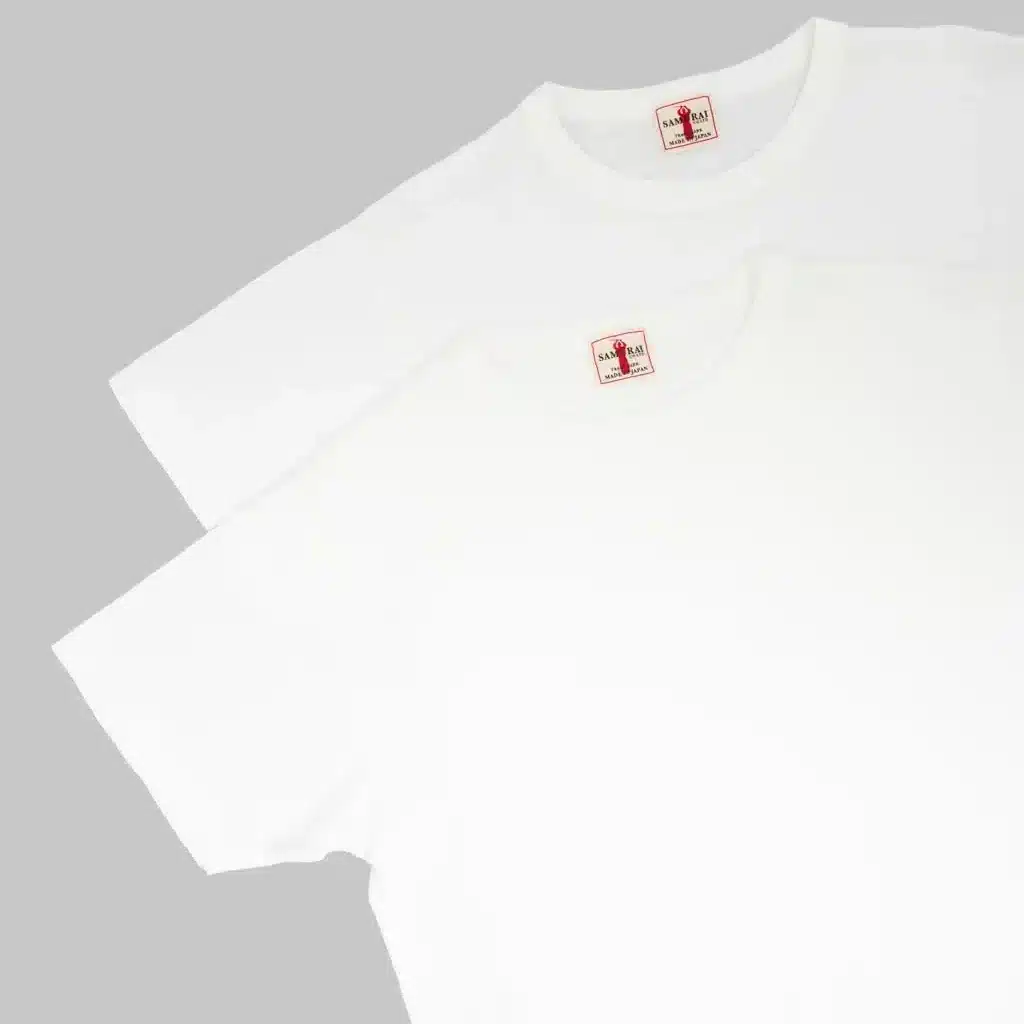
Samurai 2-pack
Slim-fitting and soft, these loopwheeled tees offer premium Japanese quality in a handy two-pack.
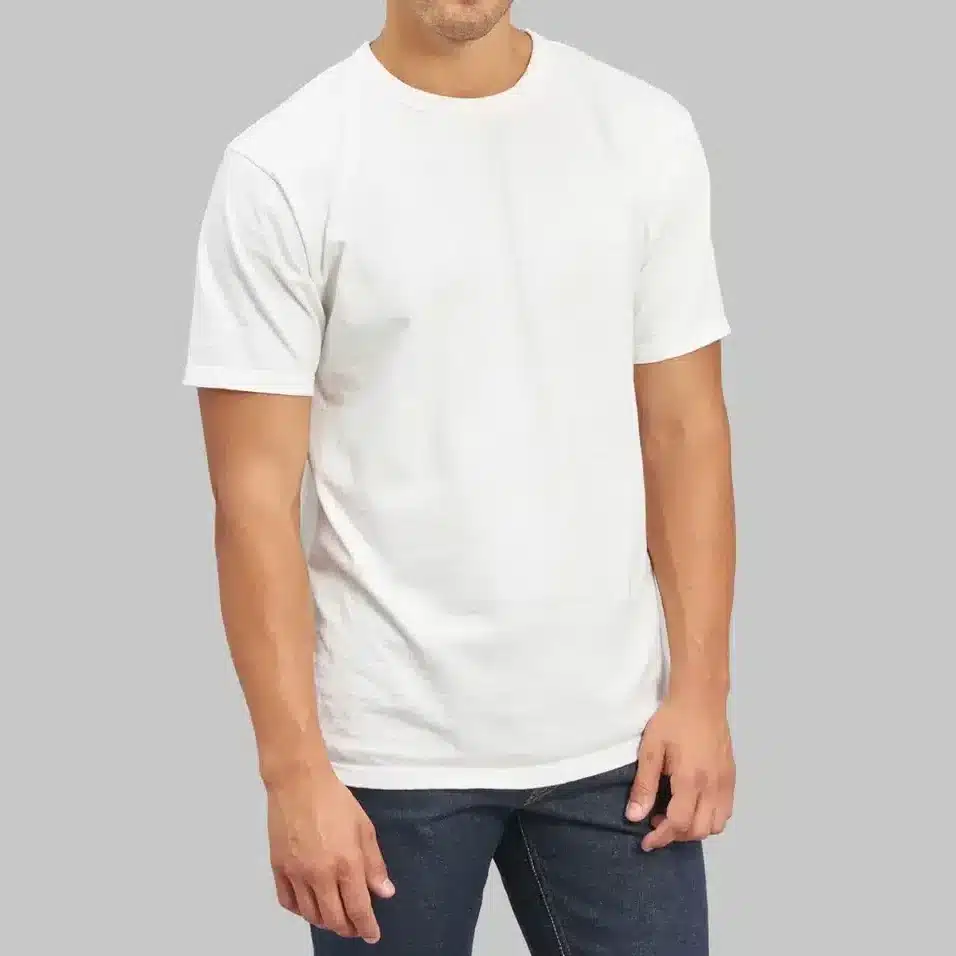
Strike Gold Loopwheeled
Made in Wakayama on vintage loopwheel machines, this slubby tee has no side seams, a triple-stitched collar, and a dense yet soft feel.
ANM Loopwheel Tee
Made by Iron Shop Provisions, A New Medium’s 8 oz. Japanese loopwheel tee has a firm collar, classic fit, and an unusually broad size range.
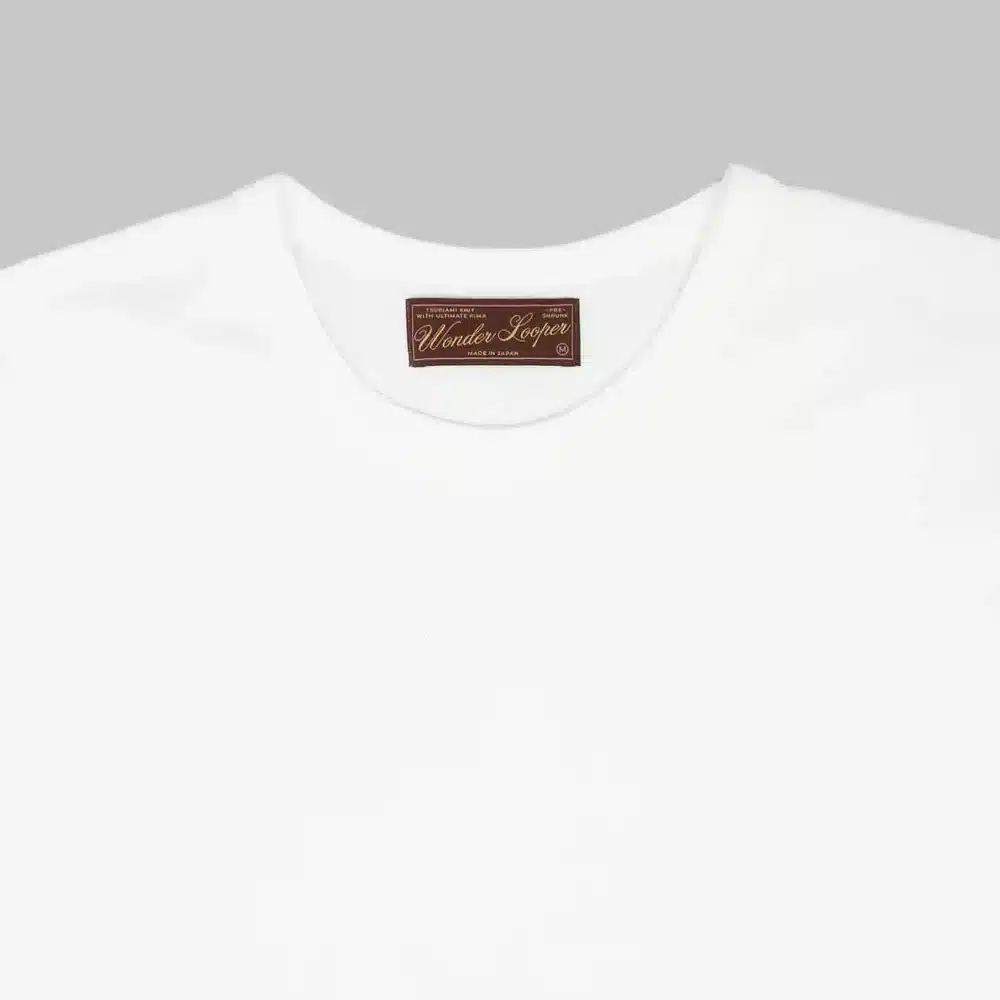
Wonder Looper Pima
Made from 5.9 oz. Pima cotton tsuriami jersey, this tee has a smooth, dense feel and a modern athletic fit.
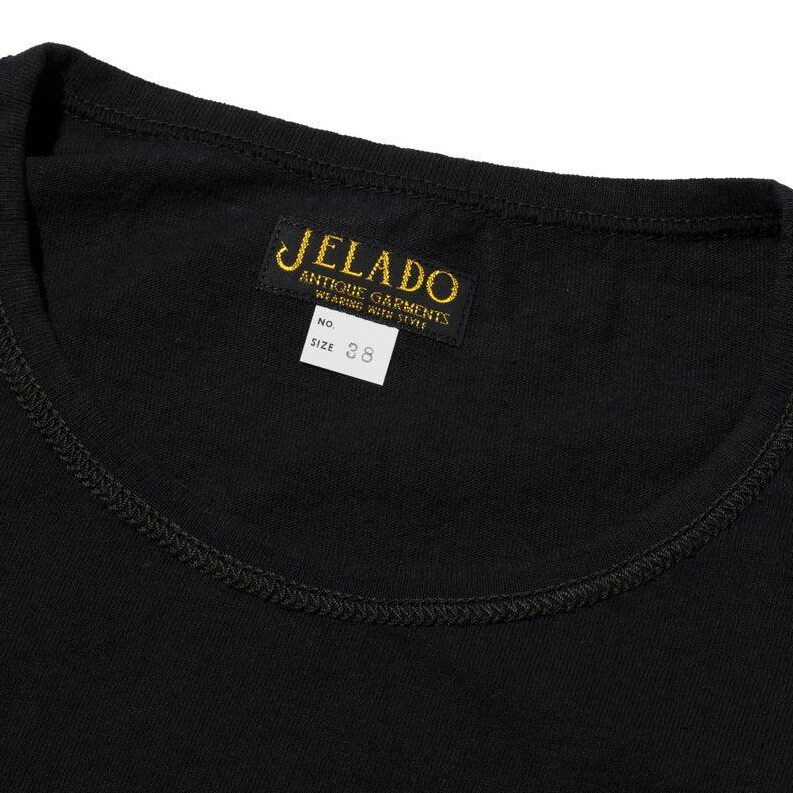
Jelado USMC
Based on a 1940s USMC undershirt, this Wakayama-knitted tee combines open-end cotton with vintage flatlock construction.
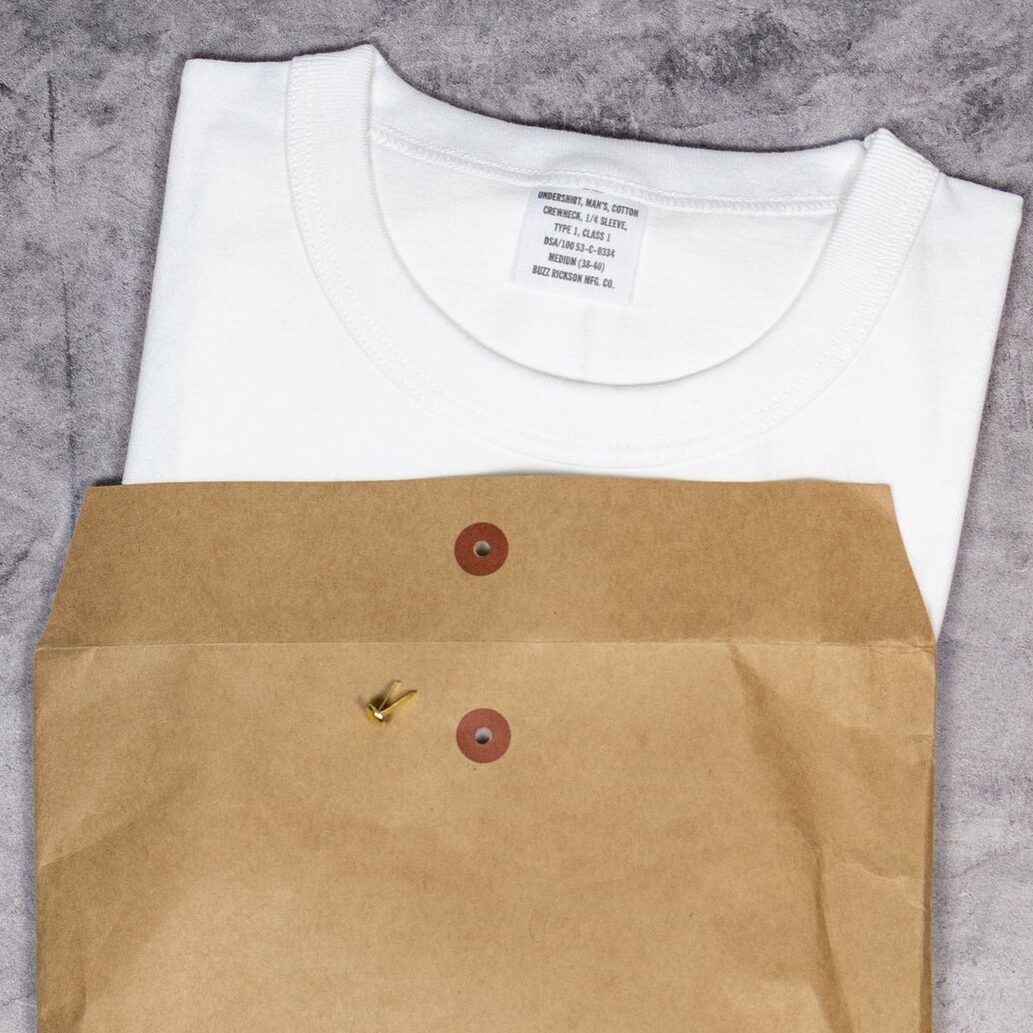
Buzz Rickson’s BR78960
Inspired by Second World War US military undershirts, this boxy loopwheel tee uses combed cotton and a reinforced binder neck.
What Does “Loopwheeled” Even Mean?
Loopwheel describes how the fabric is knitted, not how the garment is sewn. In Japan, the method is known as tsuriami. These century-old circular knitting machines are gravity-fed, allowing the fabric to drop under its own weight and putting very little tension on the yarn.
The machines work extremely slowly—around 1 metre of fabric an hour, compared with 10–30 metres on modern high-speed knitting machines. That low-tension knitting produces jersey with a soft hand, plenty of body and the subtle irregularity that gives good loopwheel fabric its character.
You can think of loopwheeled fabric as the selvedge of jersey. Both are old production methods that run slowly, produce limited quantities, and are prized for the character they give the finished fabric.
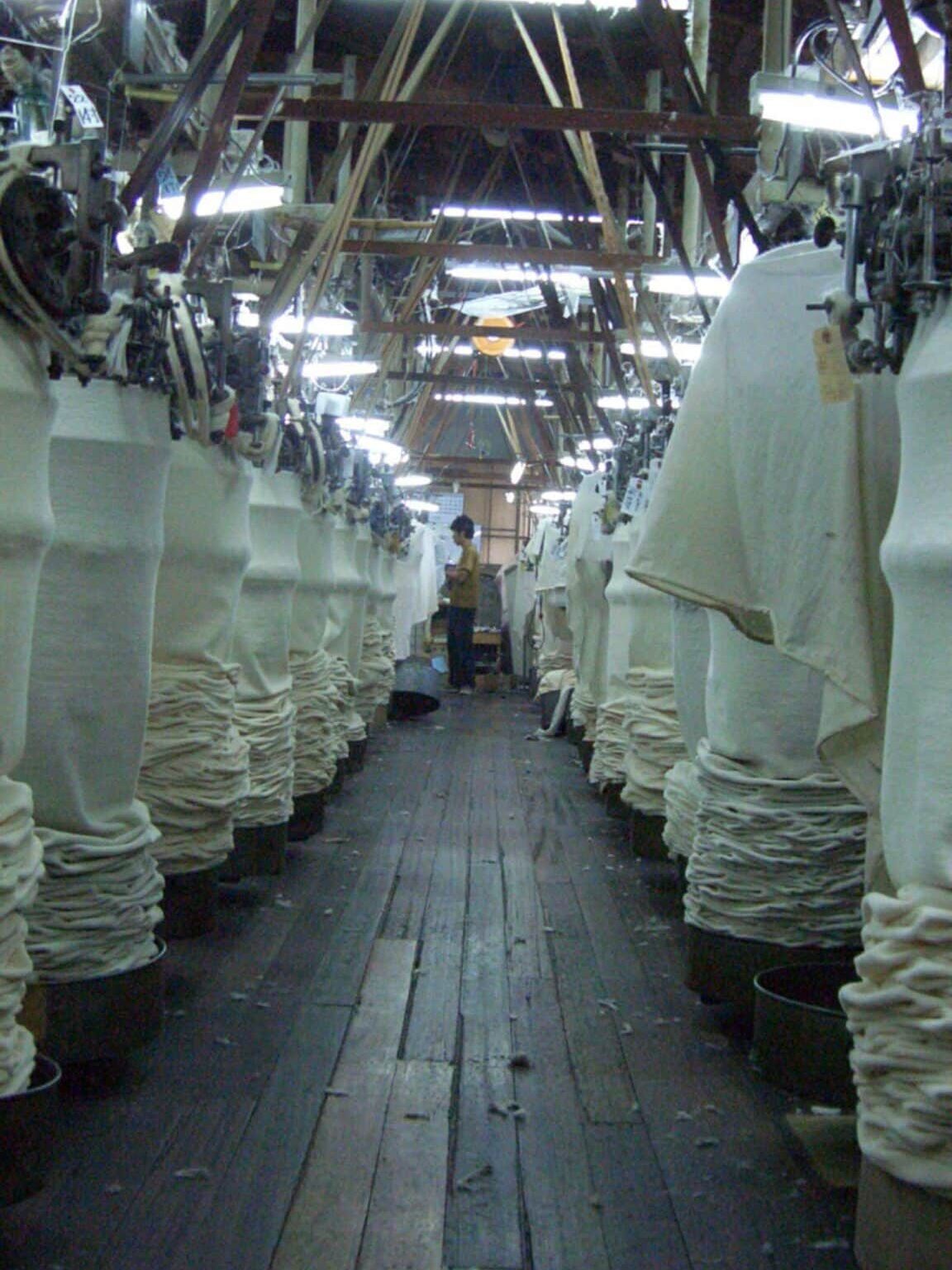
Loopwheel fabric comes off the machine as a tube, which is why many loopwheeled T-shirts have no side seams. Like the self-finished edge on selvedge denim, the missing side seam is a telltale—but it isn’t proof. Modern circular knitting machines can also produce tubular fabric, while loopwheel jersey can be cut and sewn with side seams.
Today, loopwheel production happens in only two places: Wakayama in Japan and Germany’s Swabian Alb. The machines are slow and output is limited, which helps explain why loopwheeled T-shirts generally cost more than conventionally knitted ones.
If you want to know more, Permanent Style and Standard & Strange have more insider information about how loopwheeled fabric is made.
Want More Guides Like This?
Get weekly insights on raw denim, quality T-shirts, and well-made menswear—written by Thomas Stege Bojer, founder of Denimhunters.